What makes a congress different from another corporate event
The number of people who speak: at a congress the technical job is making many
speakers and the questions from the floor heard, one after the other and on
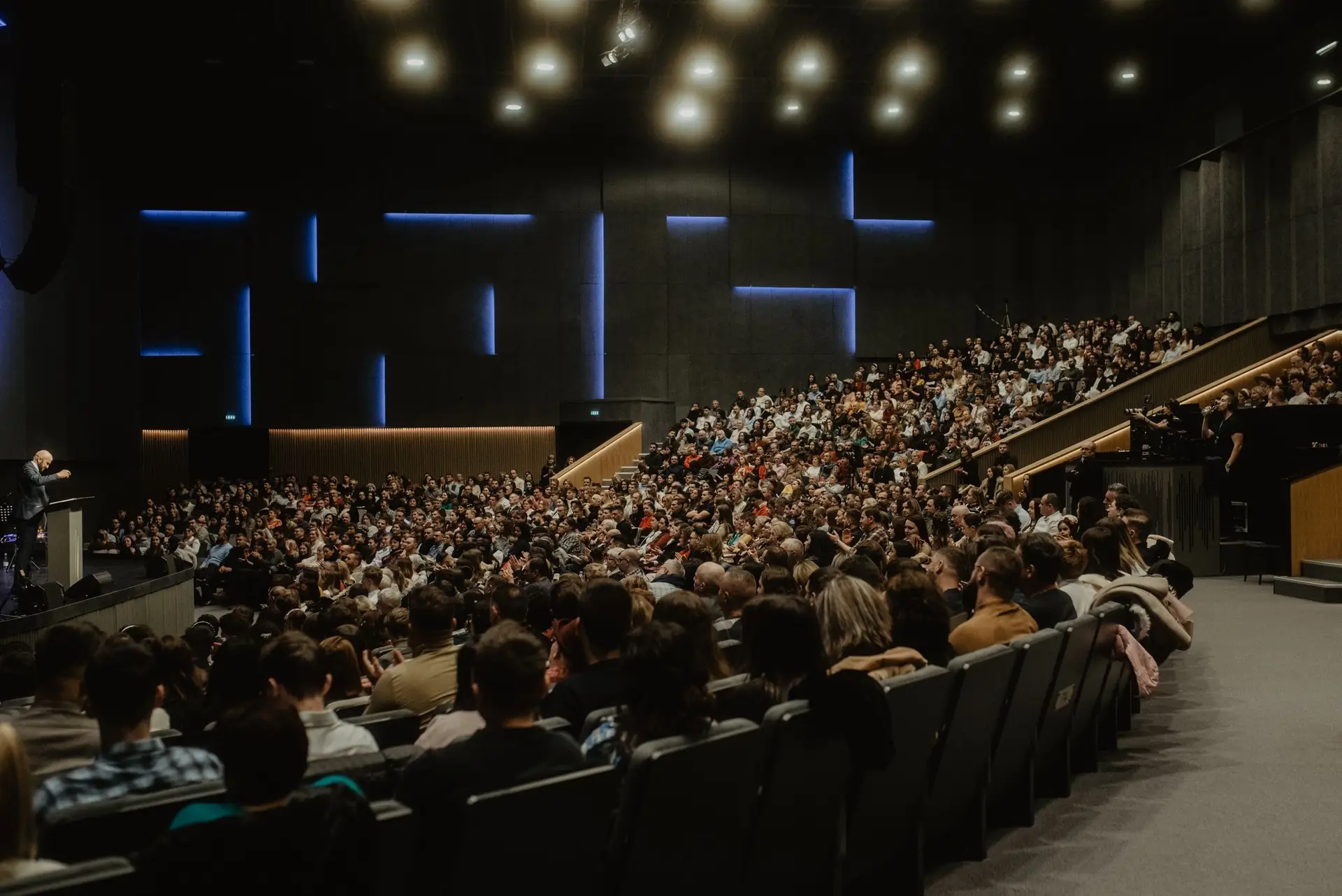
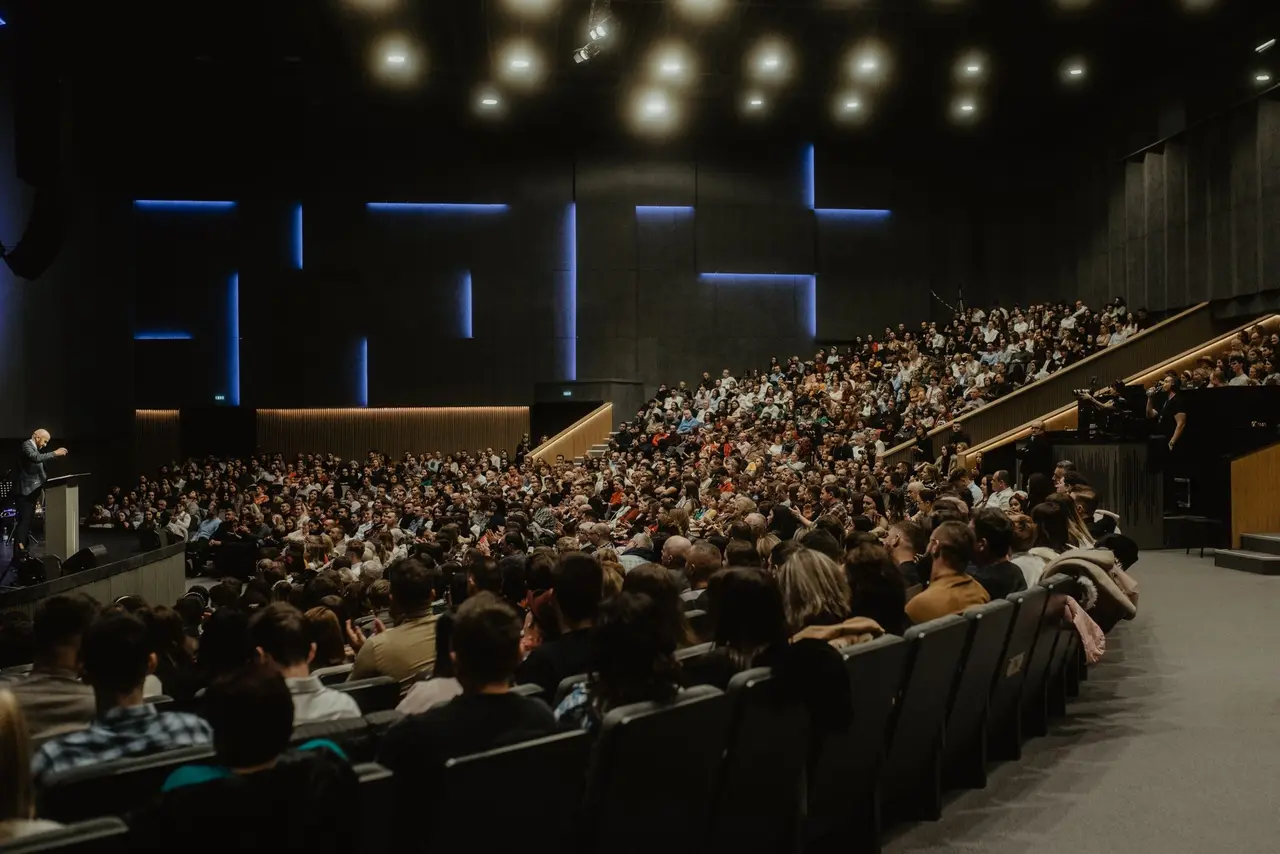
the programme’s timing. At a convention there is a stage, a message and an audience listening. At a
congress there are ten, twenty, thirty people speaking one after the other, a
chair keeping time, questions arriving from the floor and a programme that has
to run to the minute.
The technical side of a conference is not there to impress. It has to hold up
for a whole day without anyone noticing it. Whoever organises it — a
professional body, an association, a company, a university department — knows
that the verdict on the day comes down to “we could hear everything” or “we
couldn’t hear a thing”. There is no middle ground.
This page explains how we work on assemblies, conferences and congresses in
Naples, Sorrento and across Campania, what we ask for in order to quote, and
what has to be written in an offer for it to be comparable with the others.
The microphones are the real job
The technical crux of a congress is not the power of the system. It is the
number of microphone channels and who runs them.
One channel per speaker at the top table, a headset or lavalier for anyone who
moves, a handheld for the lectern, one or two roving mics for questions from
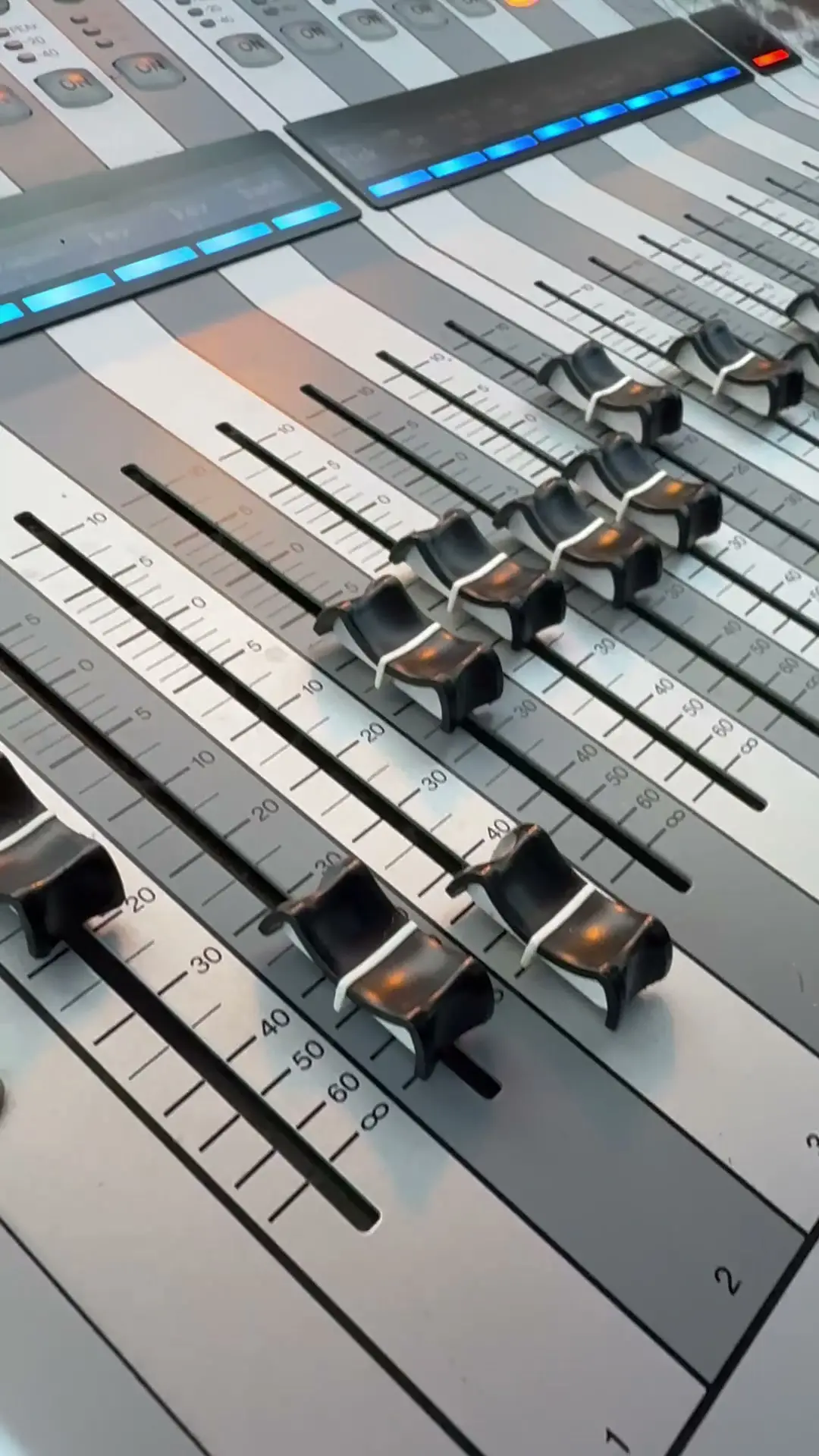
the floor. Not “how many microphones”: how many independent channels, opened
and closed on cue by an engineer who follows the programme.
When the channels are too few, the thing everyone recognises happens: the
microphone is handed across the table mid-session, somebody speaks without one,
the chair asks “can you hear at the back?”. When they are sized properly nobody
notices, which is exactly the result we want.
For the speakers we add foldback: whoever is talking needs to hear
themselves, especially in large rooms where the main system reaches the
audience and not the table. It is a detail that changes how confident a speaker
feels.
Speakers alternating: the programme and the handovers
At a congress the problems arise in the handovers, not during the talks. One
speaker steps down, another steps up, the slides change laptop, the chair opens
the floor: every handover is a point where something can be left open or
closed at the wrong moment.
That is why we ask for the programme in advance and walk through it with the
chair. The engineer has the running order in sight, knows who follows whom and
keeps the channels ready. The content technician has the presentations loaded
in the right order. When the programme changes on the day — and it almost
always does — there is a person at the desk following it in real time.
Slides, video and screens readable from the back
At many conferences the slides are the content: data, charts, tables. If they
cannot be read from the last row, part of the room is looking at a bright
rectangle.
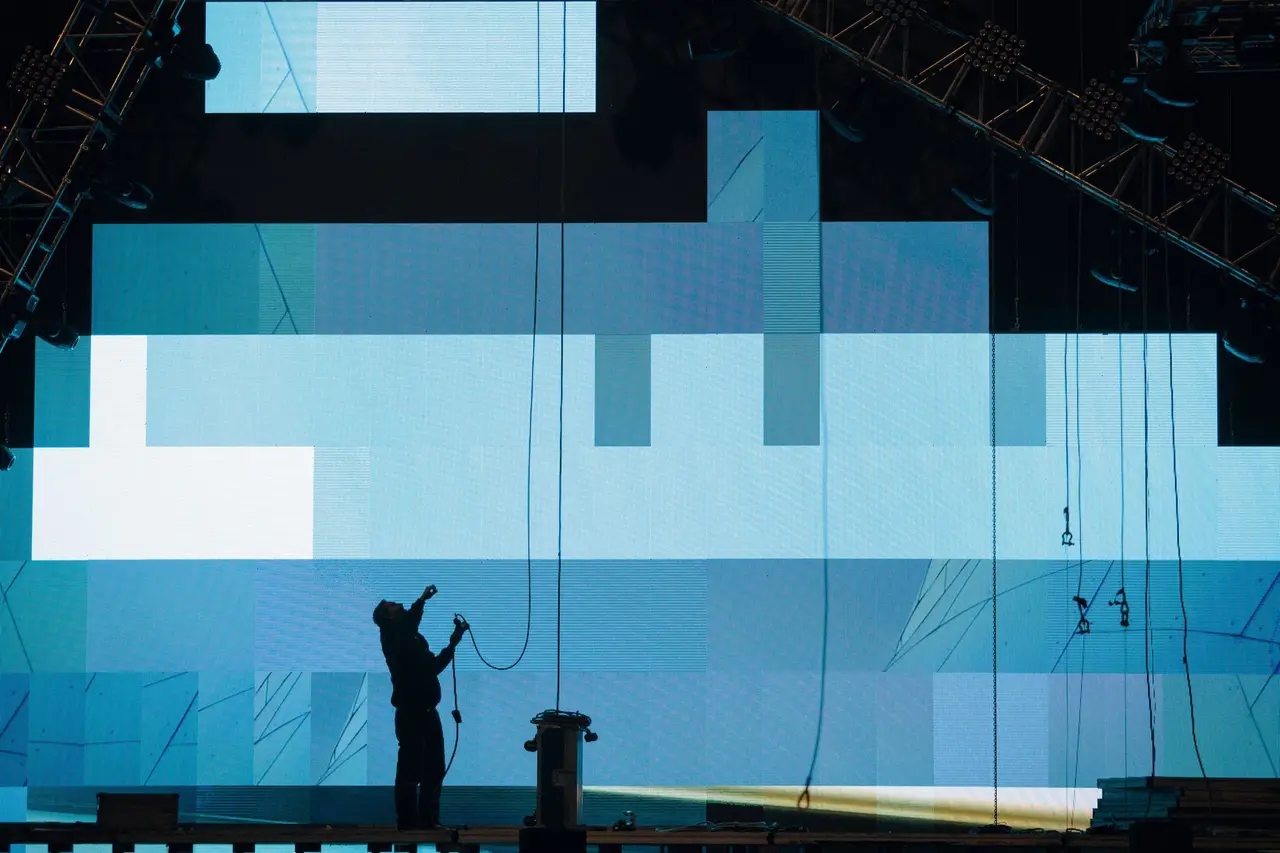
Depending on the room we provide projection with a dedicated screen or a
LED wall: in bright or long rooms the LED wall
keeps contrast and legibility where a projector struggles. Venues around Naples
and on the coast tend to have the things that defeat projection — glazing, sea
views, daylight — and this is where it matters. We receive the presentations
beforehand, check them in the right format and run them from the desk, so no
speaker has to plug in a laptop on the fly.
Recording, and the audience that is not in the room
More and more conferences have two audiences: the one present and the one
connected. The audio recording comes straight off the mixer, so the voices are
as clean as they are in the room rather than picked up by an ambient
microphone.
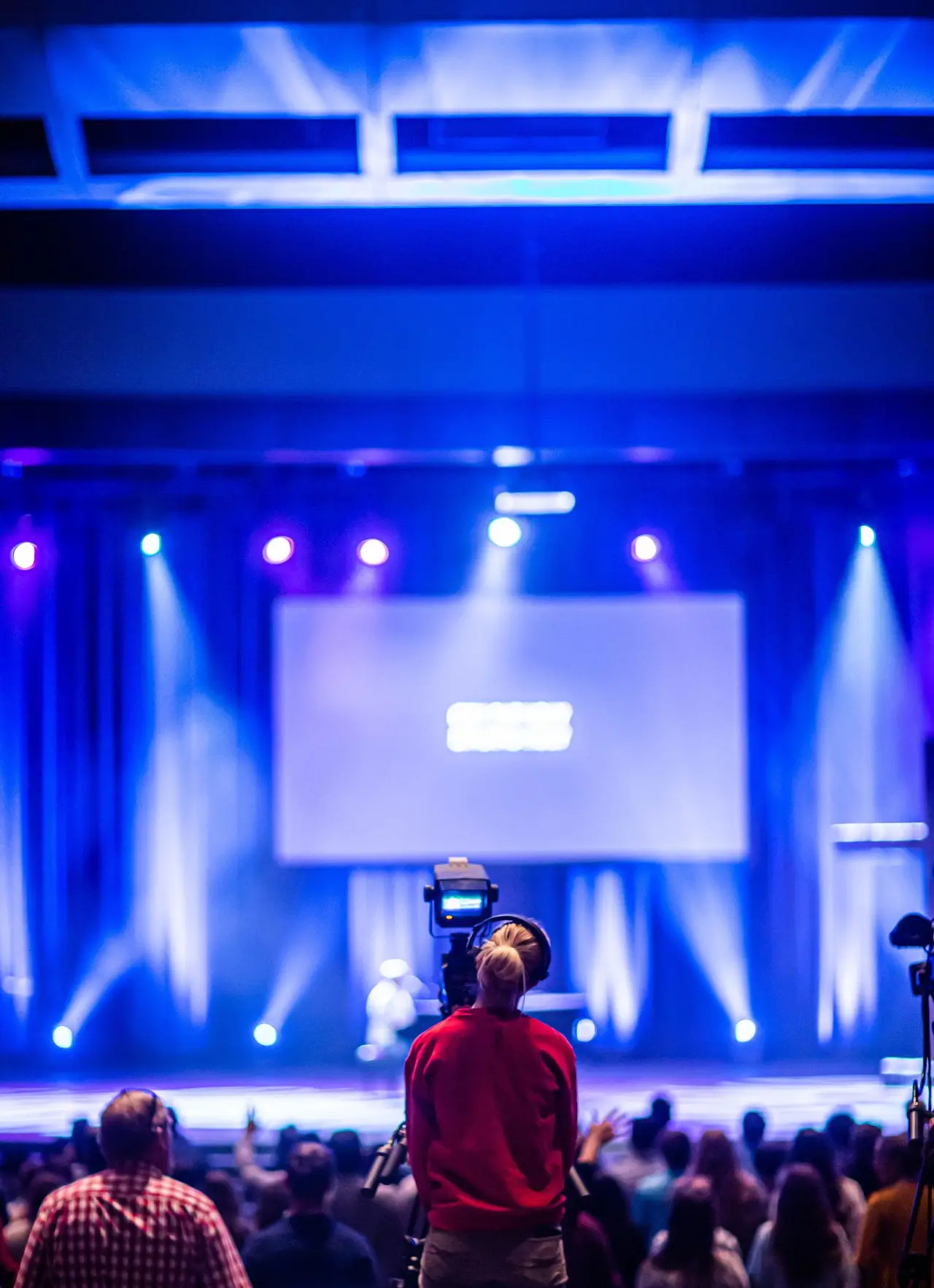
Streaming and filming are configured as a separate service, alongside the
build and not apart from it: the classic risk of a hybrid event is two crews
that do not talk to each other, and a speaker who can be heard in the room but
not remotely. The first thing we prepare is a separate audio feed for the
people following at a distance. Everything else is built from there.
Hotel conference rooms and congress centres: what we check
Many conferences take place in rooms that already have a system. At the site
visit we look at it with whoever runs the room and decide what to use and what
to bring: sometimes the installed coverage is adequate and we add microphones,
mixer and desk; sometimes it does not cover the audience evenly and it is
better to replace it. Either way it goes in the quote in writing, so the venue
and you know exactly what arrives.
We also check the things a floor plan does not say: where the desk sits
relative to the top table, how much power there is and where, whether the
screen can be seen from the whole audience, the hours we can build and the
hours by which we have to be out.
For associations, professional bodies, universities and institutions
Whoever organises a conference for an association, a professional body or an
institution almost always collects several quotes and has to compare them. The
items that really move the total are few, and worth checking on every offer:
- How many wireless microphone channels are included — not how many
microphones.
- Whether an engineer is present for the whole day, not only at the build.
- Who runs the slides, and from which position.
- Whether build and de-rig fit the venue’s actual hours.
- Whether there is spare equipment on site: one extra radio mic and a
double cable are not an extra.
A lower offer that does not name these items is not lower: it is incomplete.
For conferences that recur every year, the first configuration stays as the
baseline: the following year it is updated against the programme, not started
from scratch.
Who you call on the day
One person, the same one you have spoken to from the start, who is at the desk
that day. Not an on-call number: the contact who did the site visit, knows the
room and has the programme in sight.
If you are organising a conference, an assembly or a congress in Campania —
from another city or another country — tell us about it: we arrange a site
visit and come back with a written configuration, with a price rather than a
range. For the rest of the corporate side — conventions, launches, gala
dinners — see corporate event production.