Send us the rider first
If the band has a technical rider, that is the most useful thing you can send
us. We read it before quoting and answer honestly: what we cover as standard,
what we would add, and — occasionally — what the venue physically will not
allow regardless of budget.
That last part matters in Campania. A rider written for a theatre does not
automatically translate to a villa terrace or a cloister, and it is better to
know in advance than to discover it at soundcheck.
If there is no rider, tell us the line-up: how many musicians, which
instruments, whether there is a drum kit, and whether anyone sings while
playing. That is enough to size the system.
What a band needs that a DJ does not
A DJ set needs coverage and a monitor. A band needs a different category of
setup, and it is where most under-quoting happens.
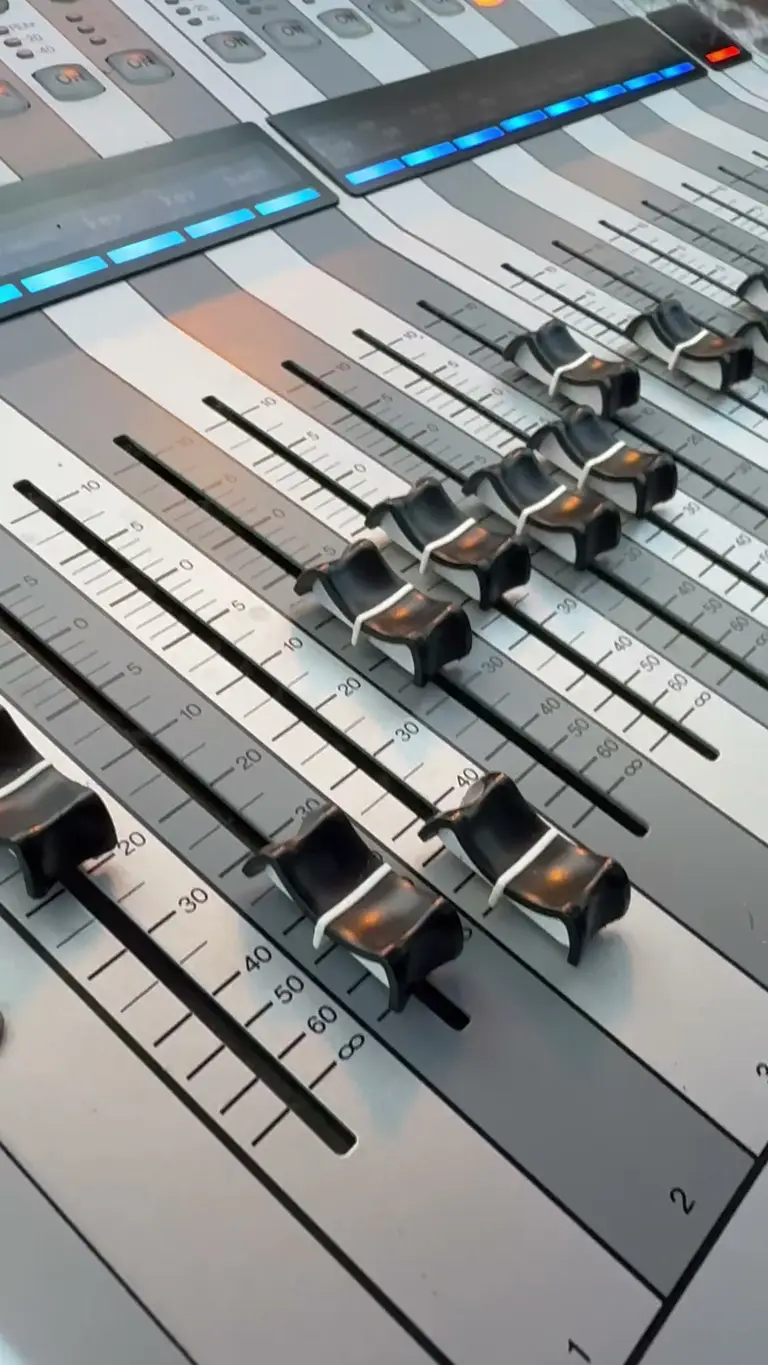
A multichannel desk, because every instrument, every microphone and every
DI line is a separate input to be balanced. Full microphoning of the drum
kit and amplifiers. Stage monitoring — wedges or in-ears — because
musicians who cannot hear themselves play badly regardless of how good the
front-of-house sound is. And a soundcheck with real time allocated to it,
not fifteen minutes before doors.
Soundcheck is a scheduling problem
On paper it is a technical step; in practice it is a logistics one, and at
weddings and private events it is nearly always the tight point.
A band needs the stage built, powered and quiet for the check. If guests are
already arriving, or the venue is still laying tables, the check gets cut —
and a cut soundcheck is audible for the first three songs.
The fix is planning the build backwards from the guests’ arrival, not forwards
from the crew’s. We agree that timing with the venue and with the band before
the day, and it is part of what the technical
direction covers.
Indoors, terraces, courtyards
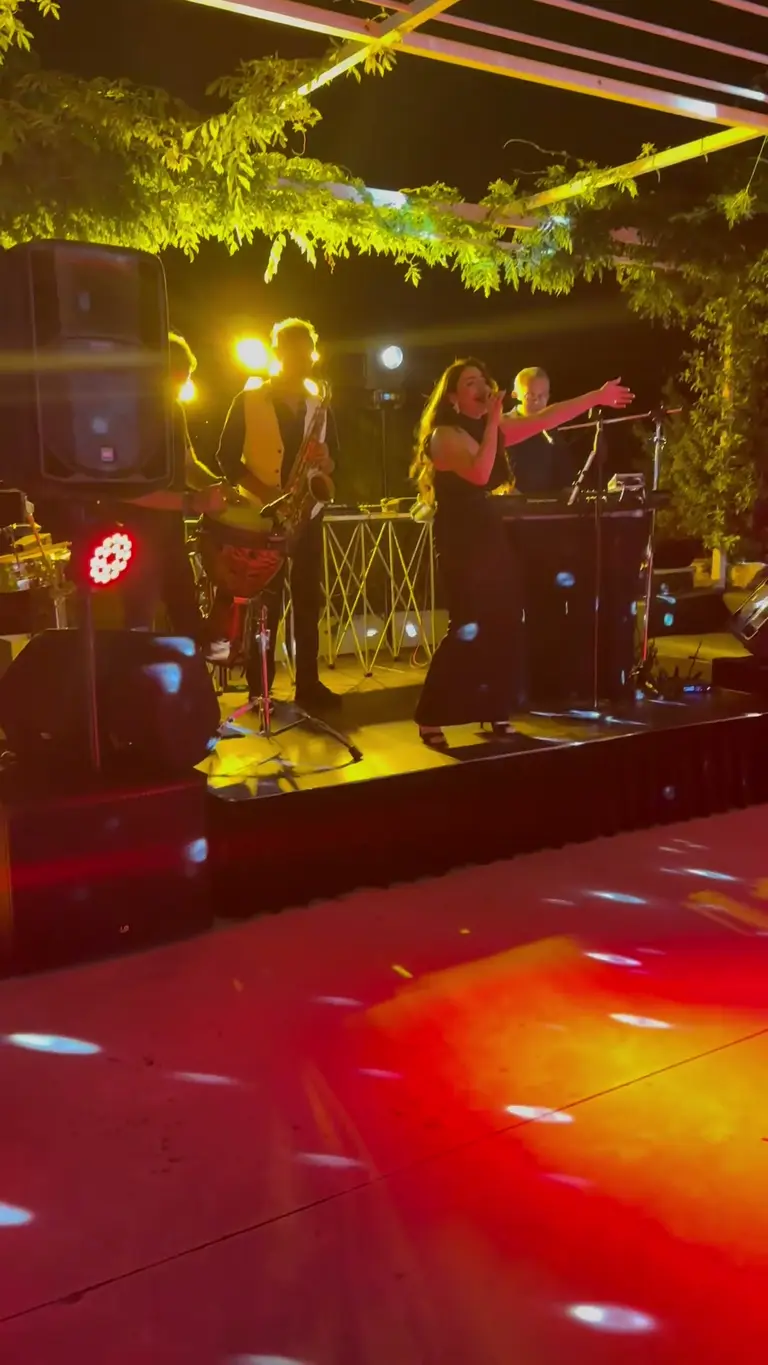
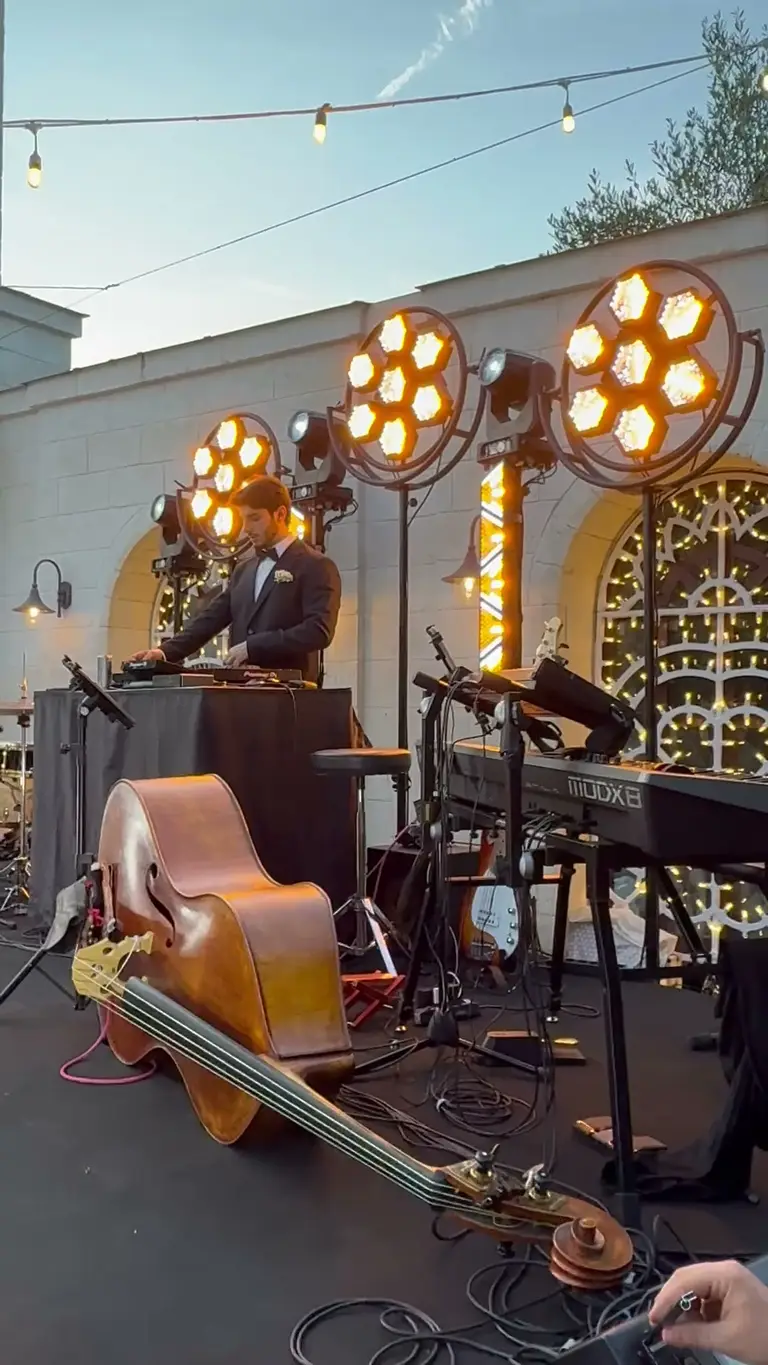
A band on a coastal terrace is a different problem from a band in a hall.
Outdoors there are no reflecting surfaces, so the sound disperses and the
system has to be sized for it; there may also be a noise limit or a curfew
set by the venue or the comune, which we check beforehand rather than
negotiate at midnight.
Historic courtyards do the opposite: they can be very live acoustically, and
the work becomes controlling reflections rather than adding power.
Stage and light
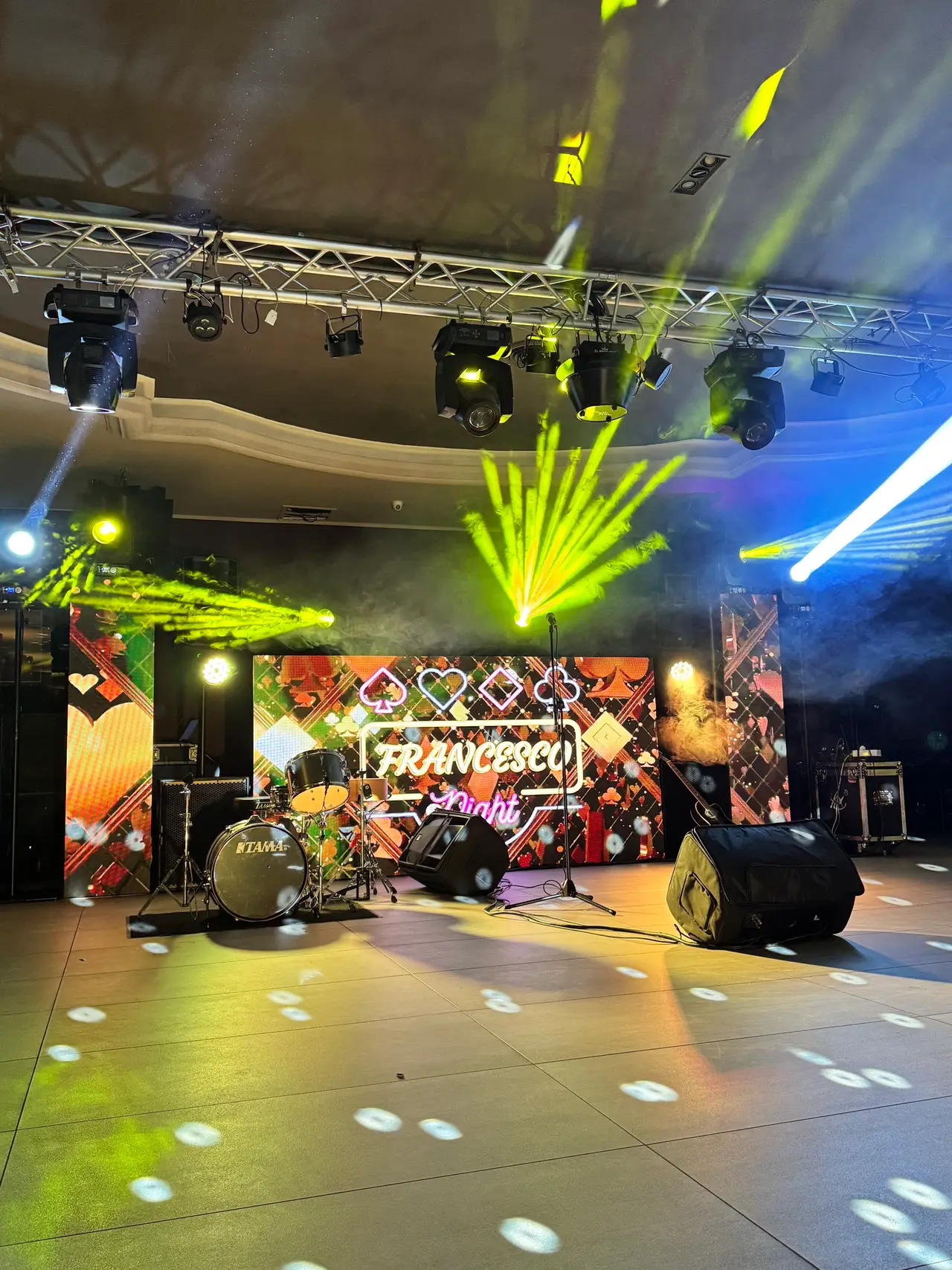
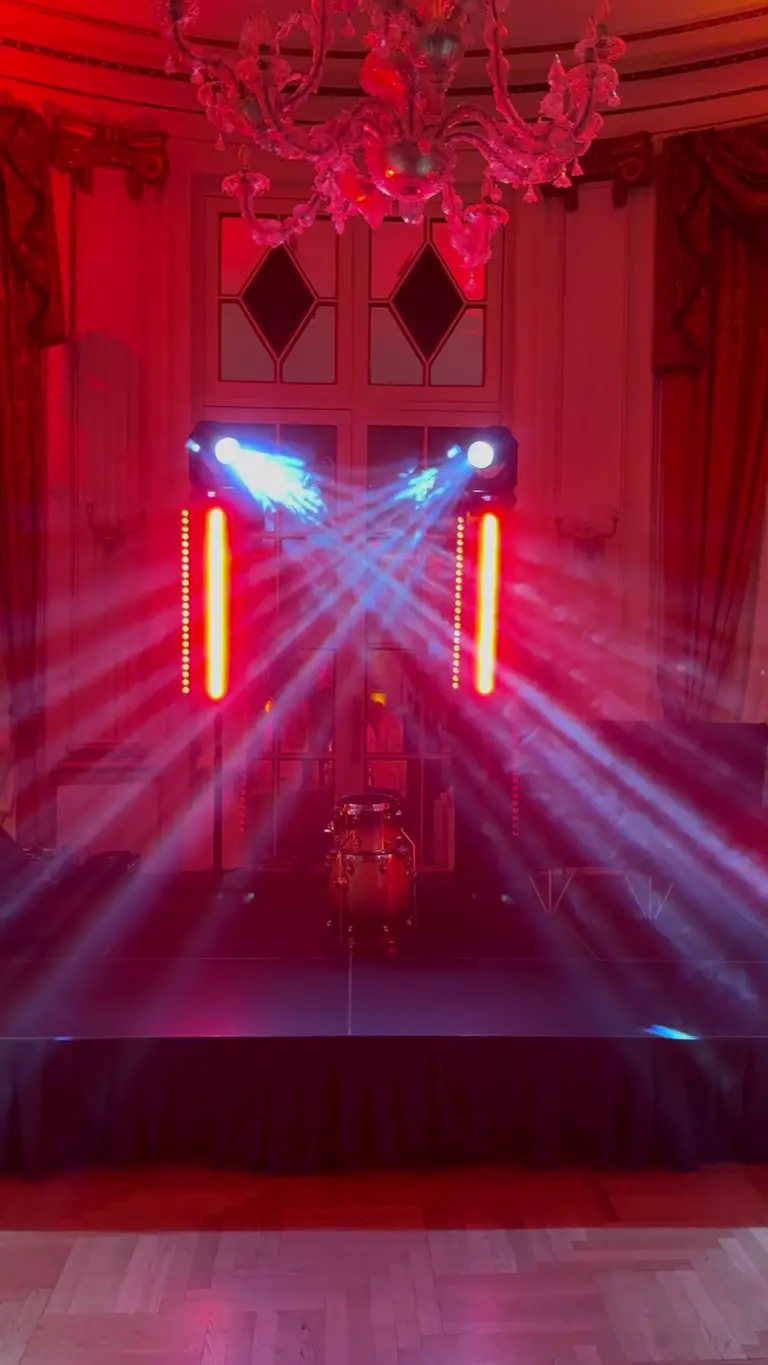
A band needs somewhere to stand, and usually something above it. Deck height
and area come from the line-up; the truss above carries the
lighting and sometimes a
LED wall for visuals.
See staging and rigging for how that is built.
What to tell us
The line-up or the rider, the venue, whether it is indoors or out, and what
time the band can get on stage for the check. From that we propose a
configuration — and if the schedule does not allow a proper soundcheck, we will
say so, because that is the thing most likely to spoil the set.